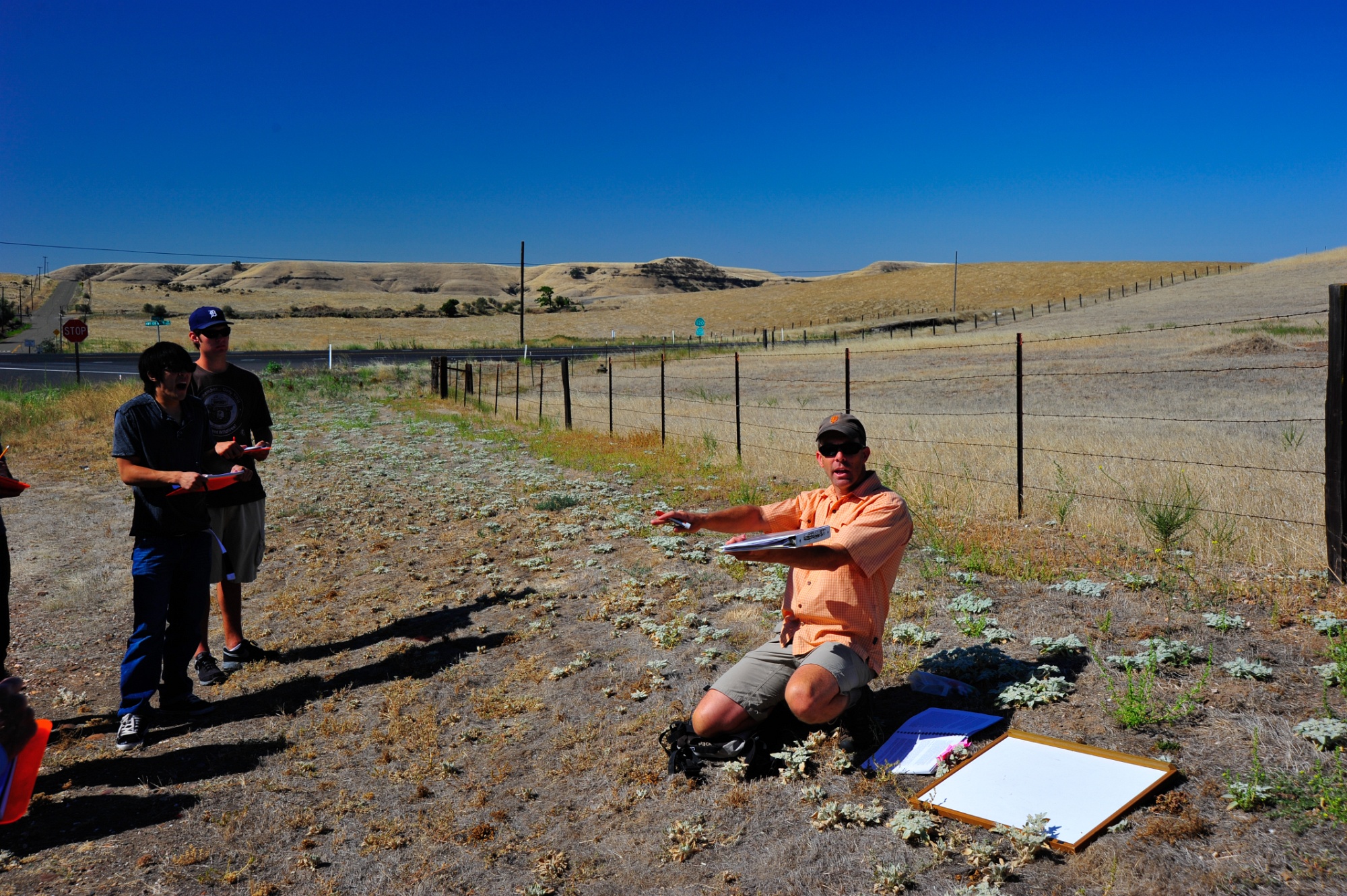
1 Stop 1 of the first day, just outside of Knights Ferry. We were here to look at far reaches of the Mehrten Formation that consisted of volcanic debris flows originating from the area now known as Sonora Pass.
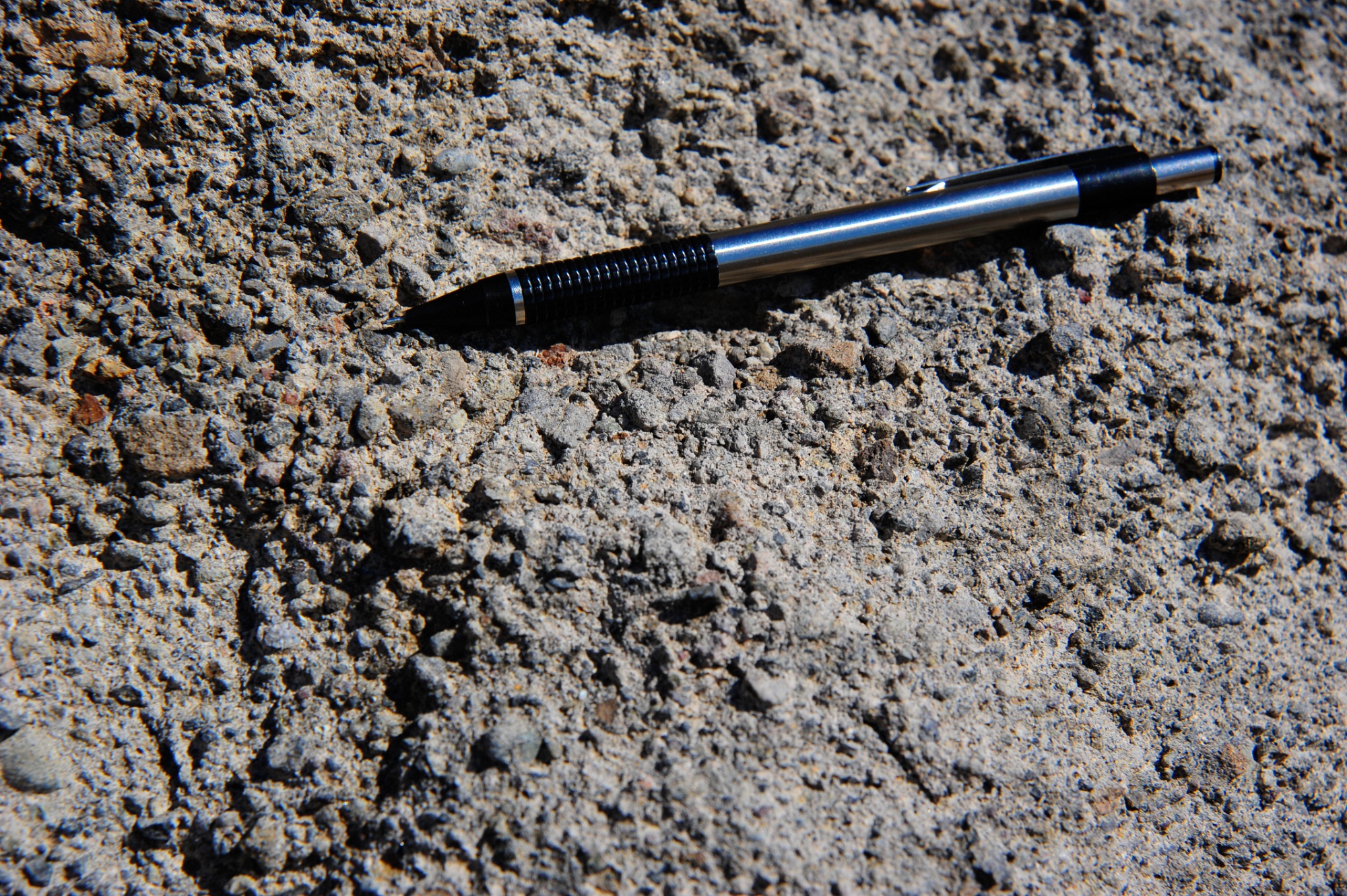
2 Mehrten Fmt debris flows from a far flung volcano that was most likely the Little Walker Caldera. The particle size of the debris is much smaller here because the volcano was nearly 80 miles away from this area. Only the smaller particles could continue to move this far.
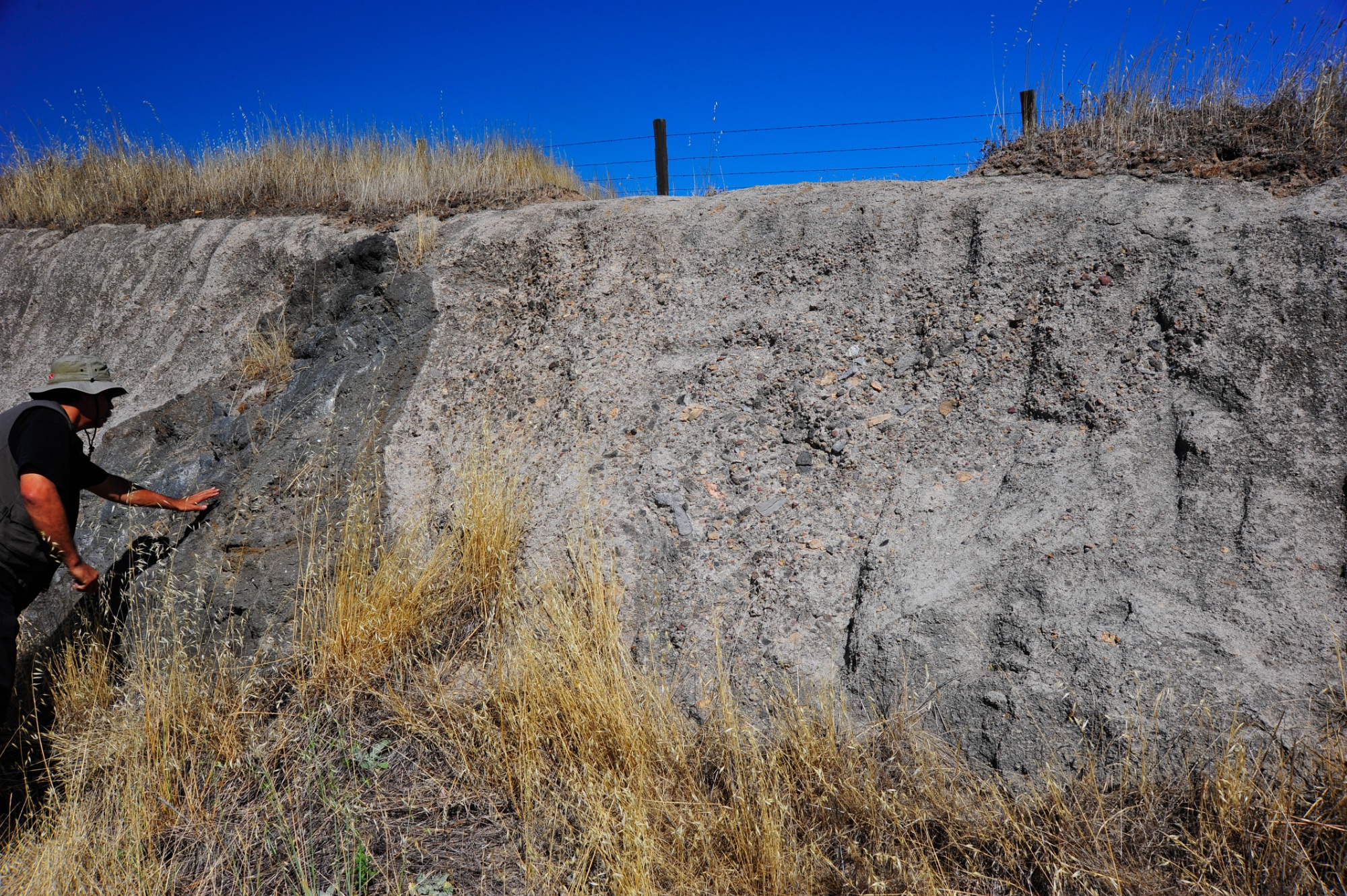
3 Mehrten Fmt debris flows from a far flung volcano that was most likely the Little Walker Caldera. The particle size of the debris is much smaller here because the volcano was nearly 80 miles away from this area. Only the smaller particles could continue to move this far.
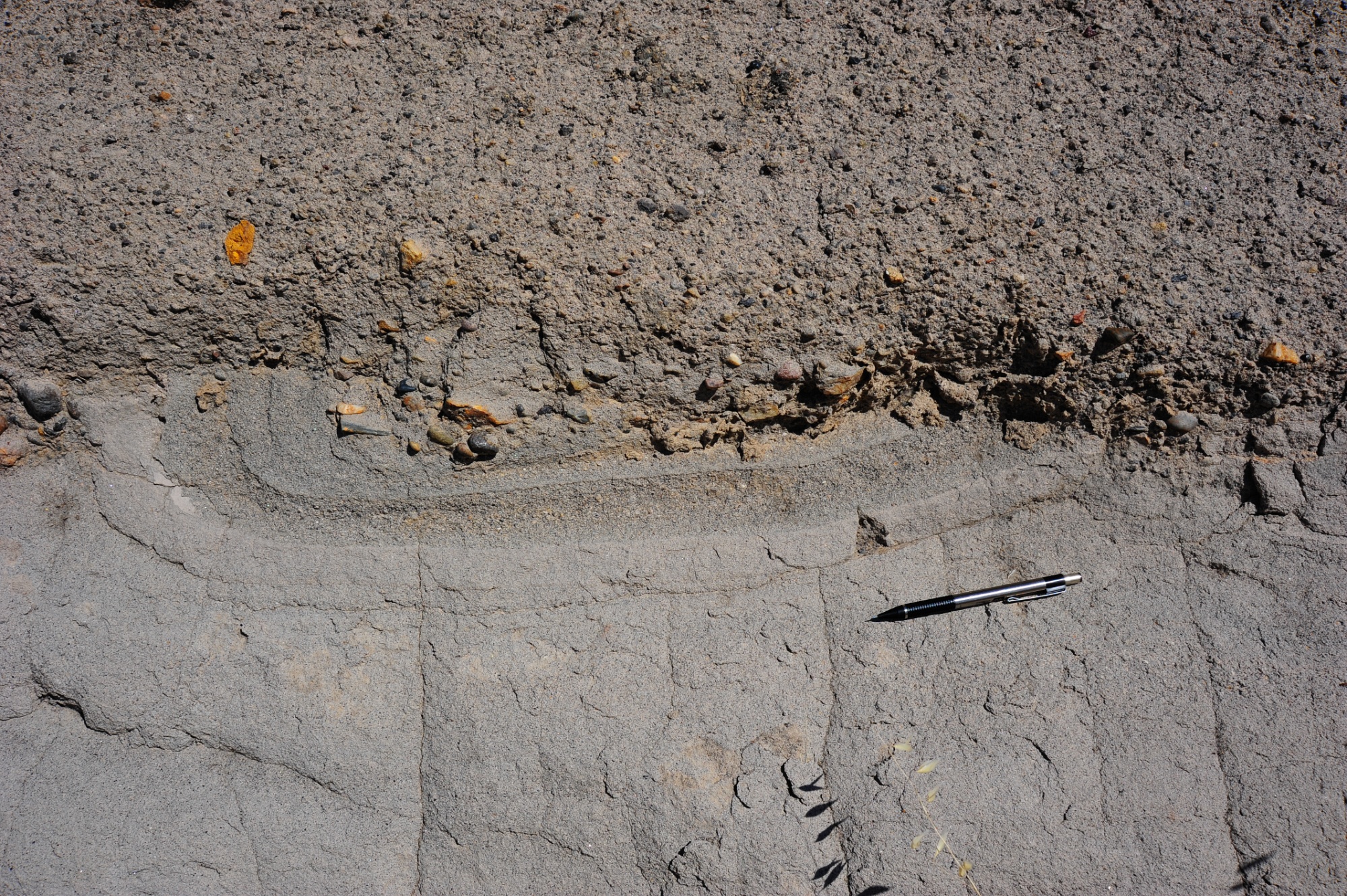
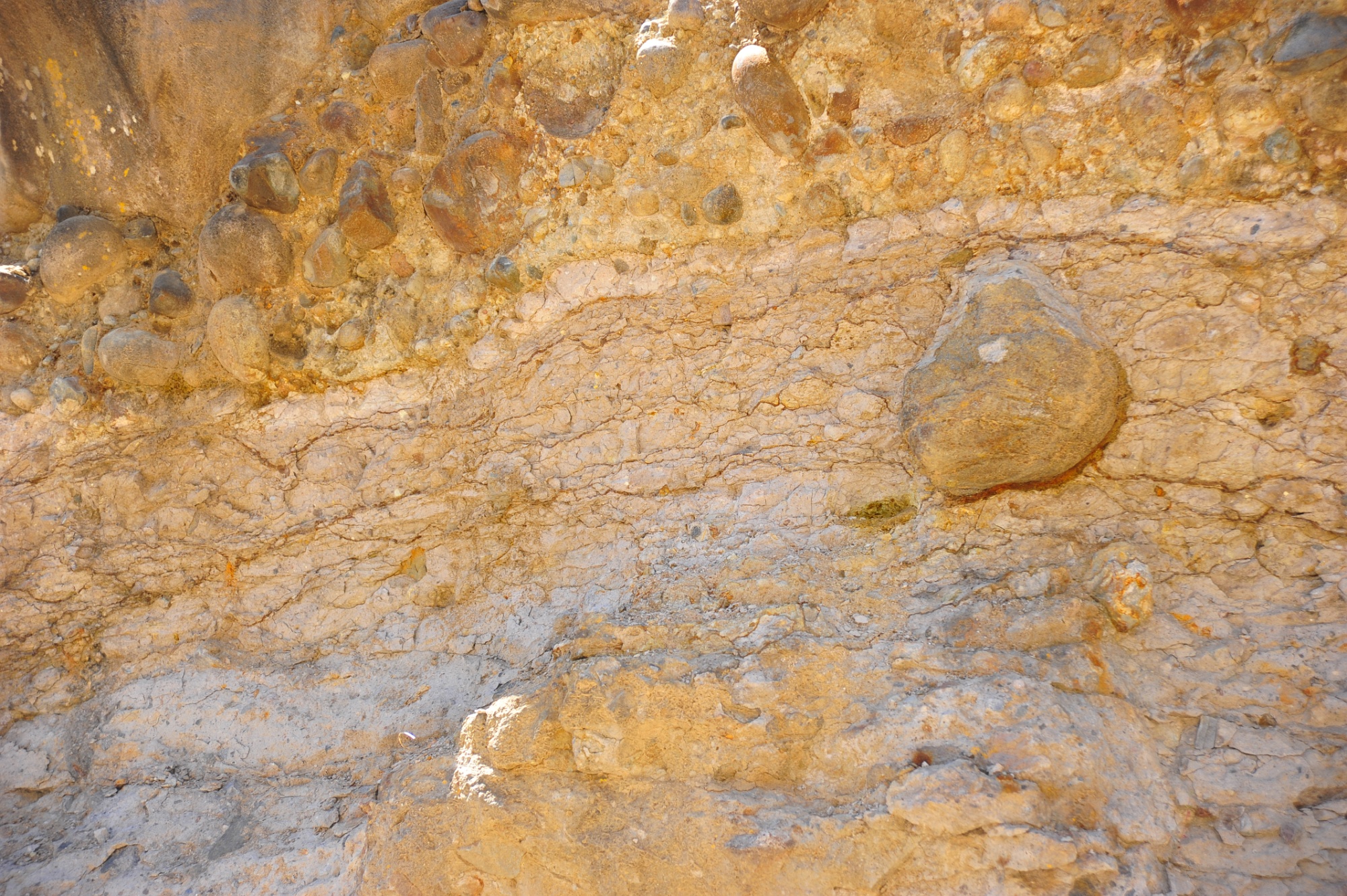
4 Interesting facies meeting: debris flow on top and sandstone greywacke on the bottom. Was this an ancient shoreline? A delta? A river sand bar? And what formed the squished bands of coarser-grained sandstone? Dunno.
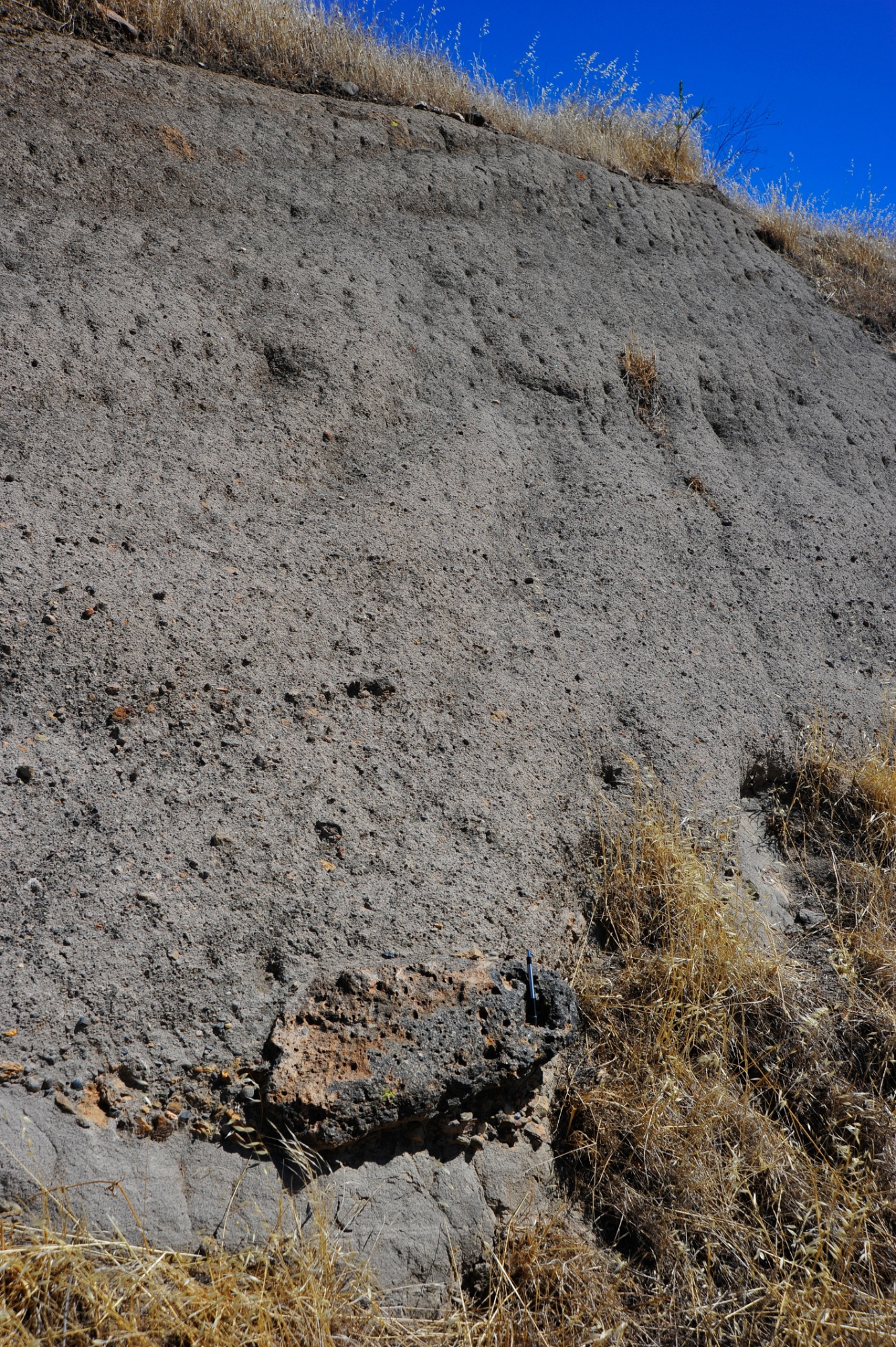
5 Here's another mysterious & large piece of latite trapped in the debris flow. Why is it so much bigger than the surrounding debris? Could it have traveled as far?
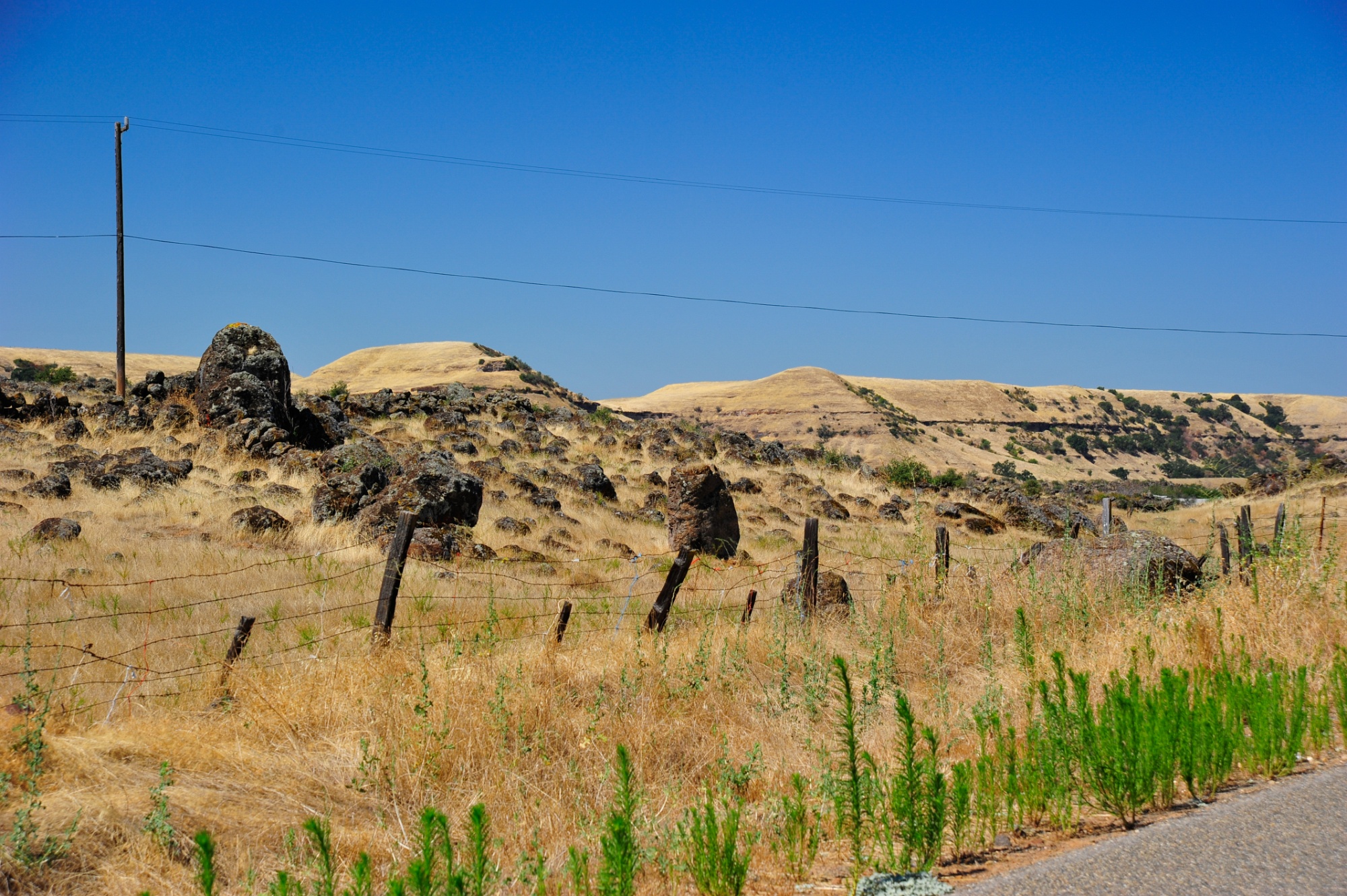
6 So here's the answer to our basalt conundrum in the debris flow. The basalt came from here, which is a mere 500 yards from the debris flow. Apparently, as the the andesitic debris flow moved over this area it plucked several boulders from the older Table Mountain lava flow. Over time the Mehrten Fmt debris flows were eroded away and re-exposed these table mountain flows. You can still see the ancient, uneroded flat surface of the hills in the background.
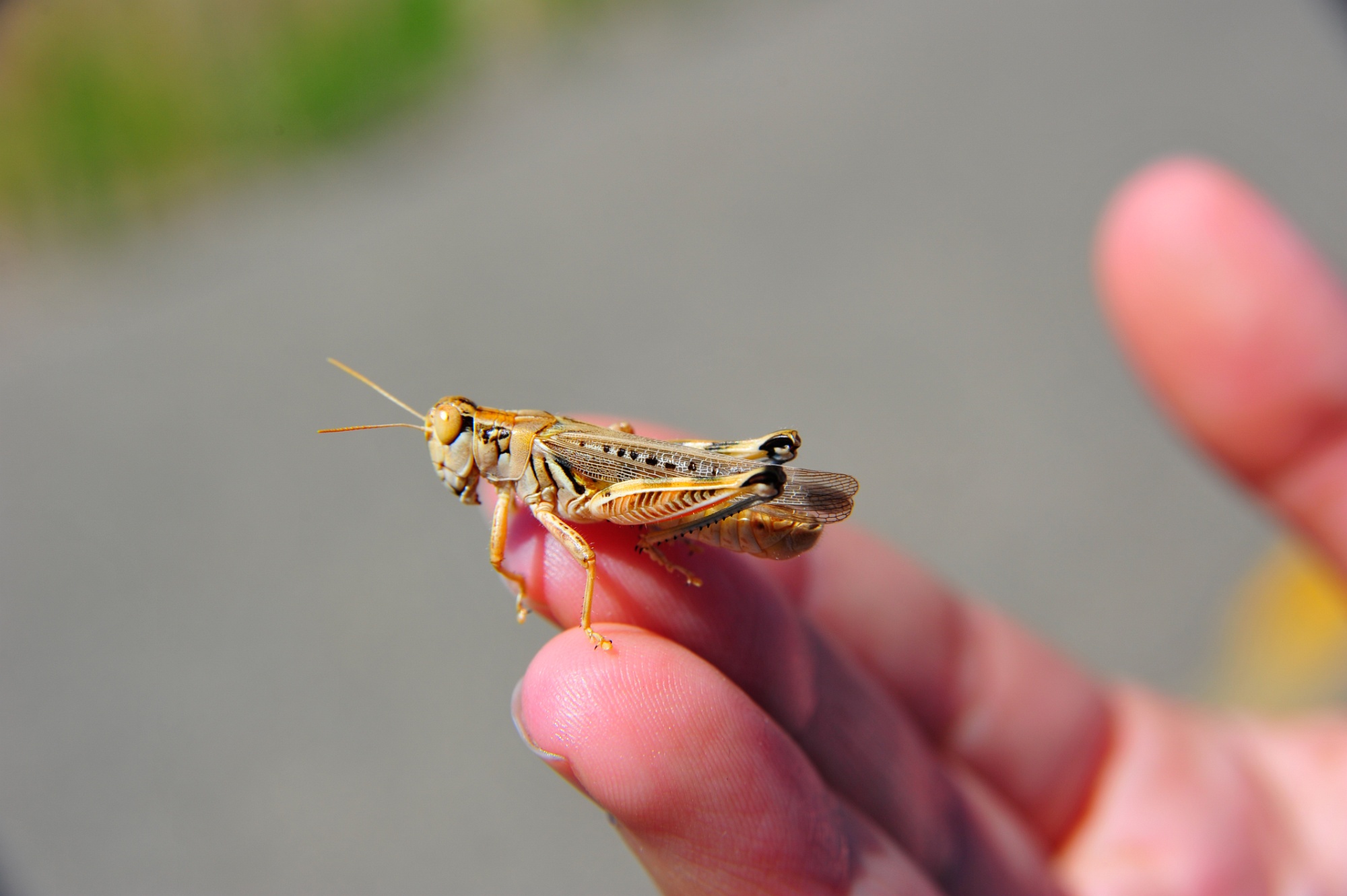
7 There was a grasshopper plague sweeping the foothills.
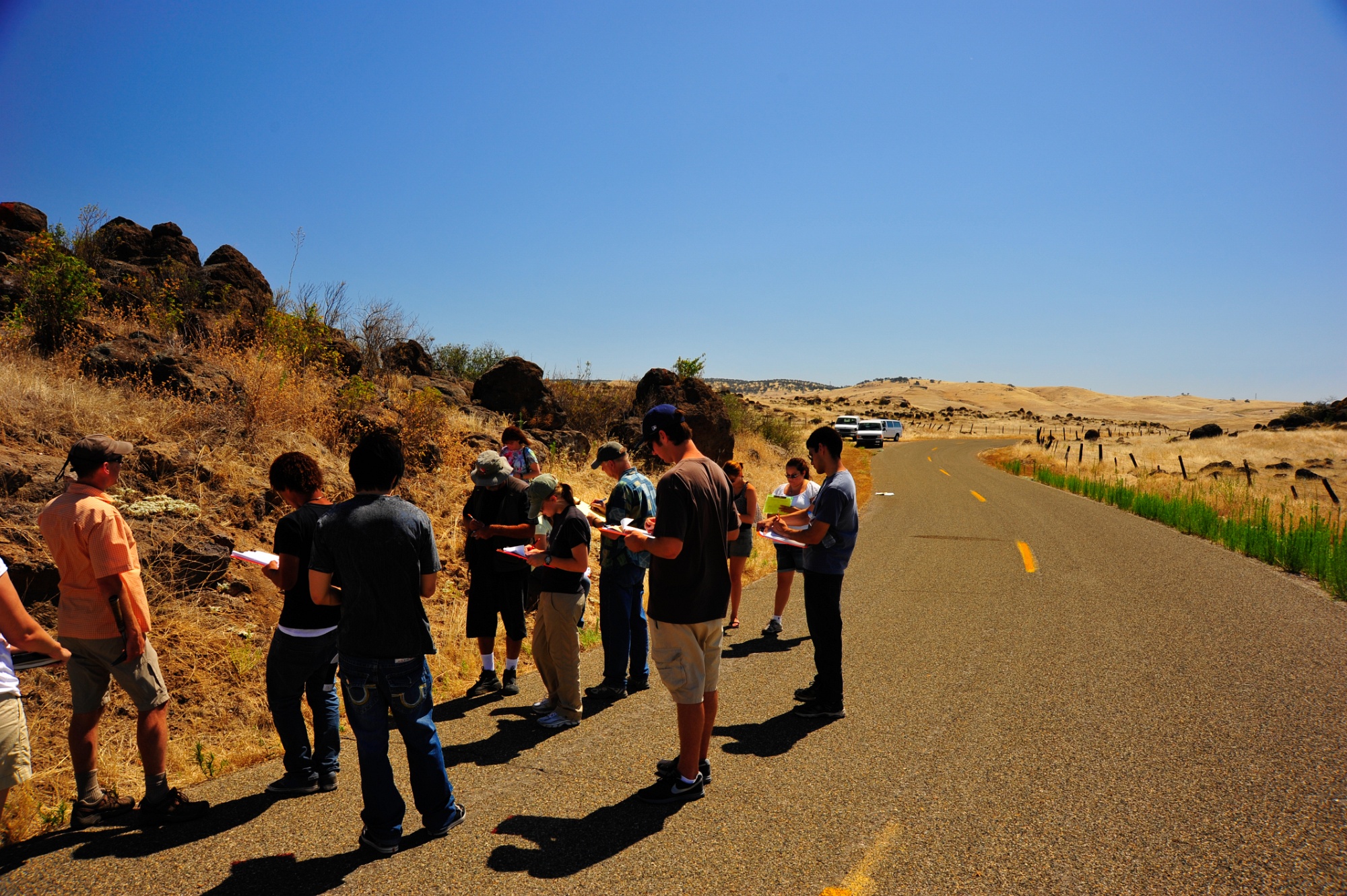
8 Noah's students ponder how this much lava flowed for 80 miles down the ancient Stanislaus River canyon.
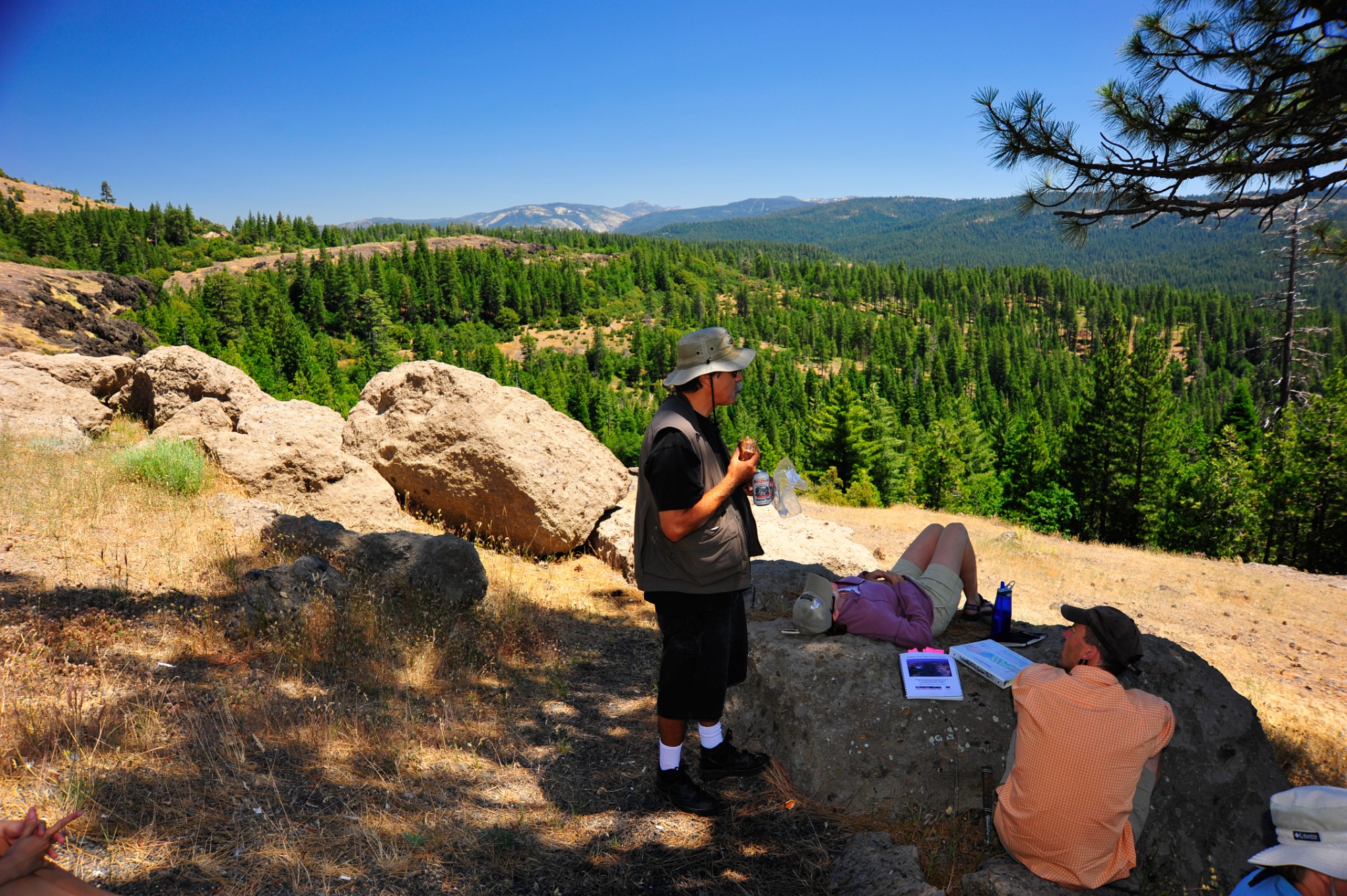
9 Lunch! The large boulders (near Little Sweden) are chunks of a pyroclastic flow from a violent and explosive eruption episode. In them one can find lots of glassy pumice fragments as well as carbonized plant fossils. Dodge Ridge is WAY in the distance as Laura sleeps through lunch and Gerry & Noah shoot the breeze.
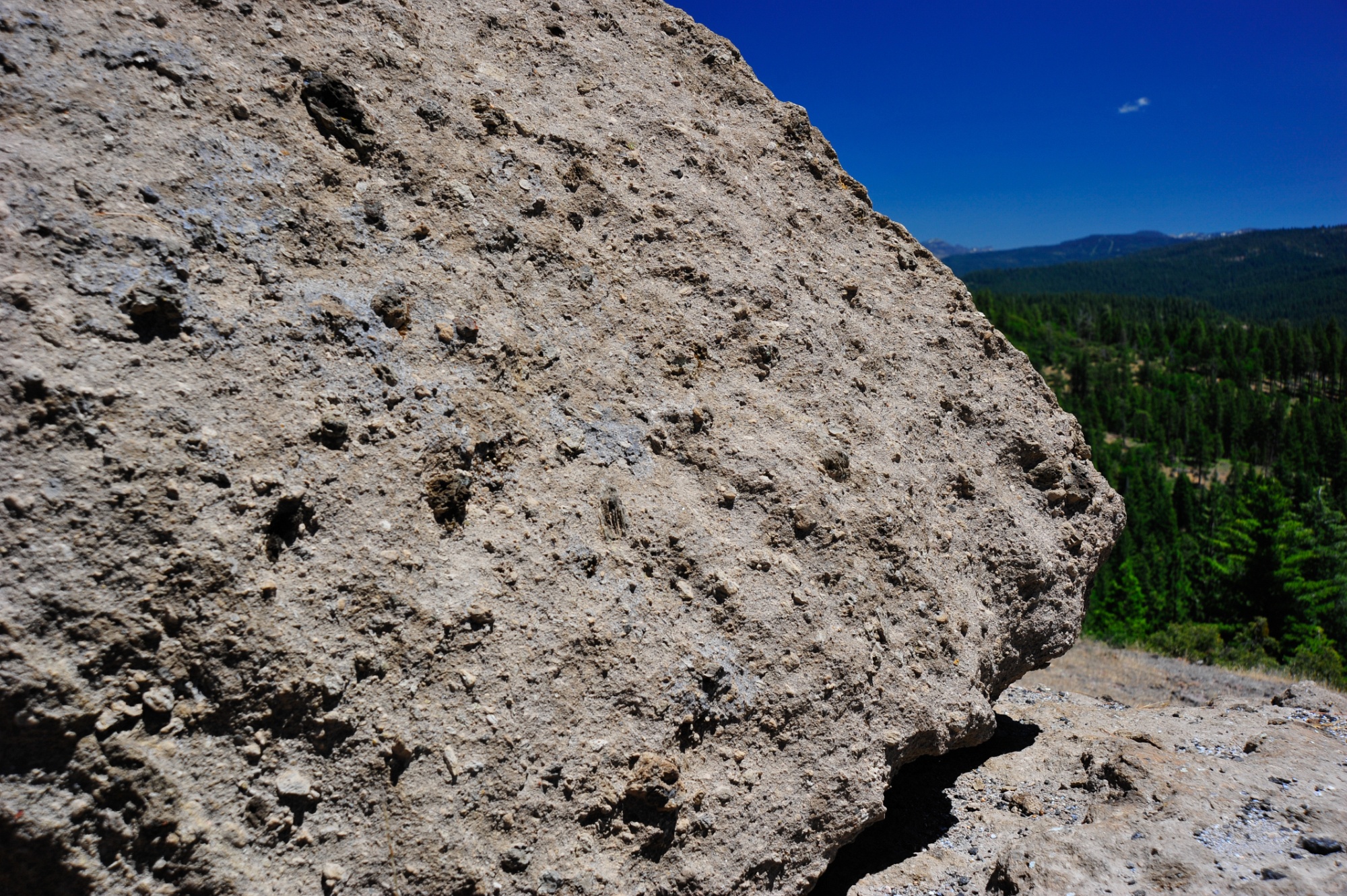
10 A zoom of one of the boulders (Dodge ridge in background).
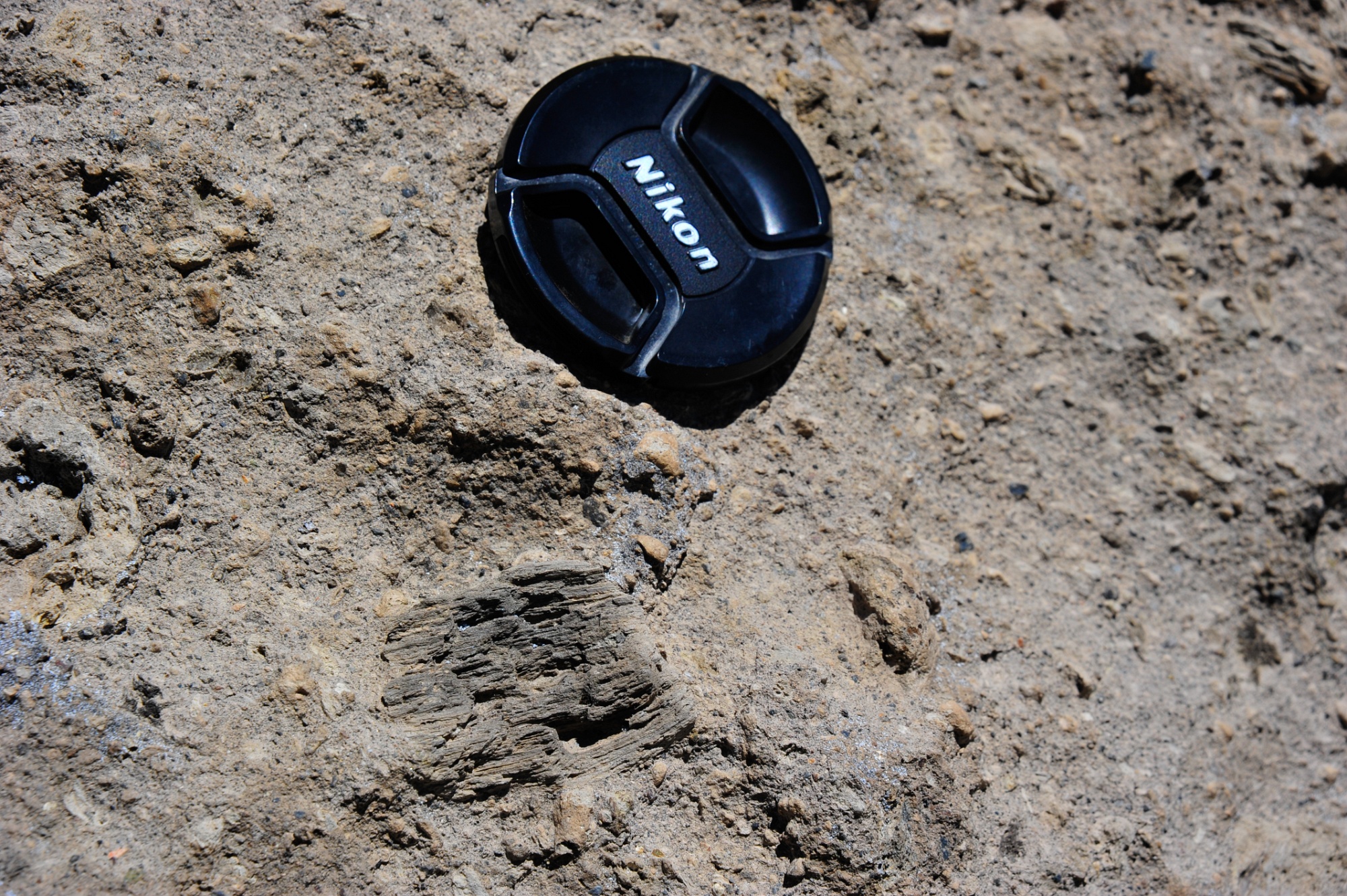
11 Detail of pumice within pyroclastic debris. Geologically-speaking, this would be considered a block and ash flow.
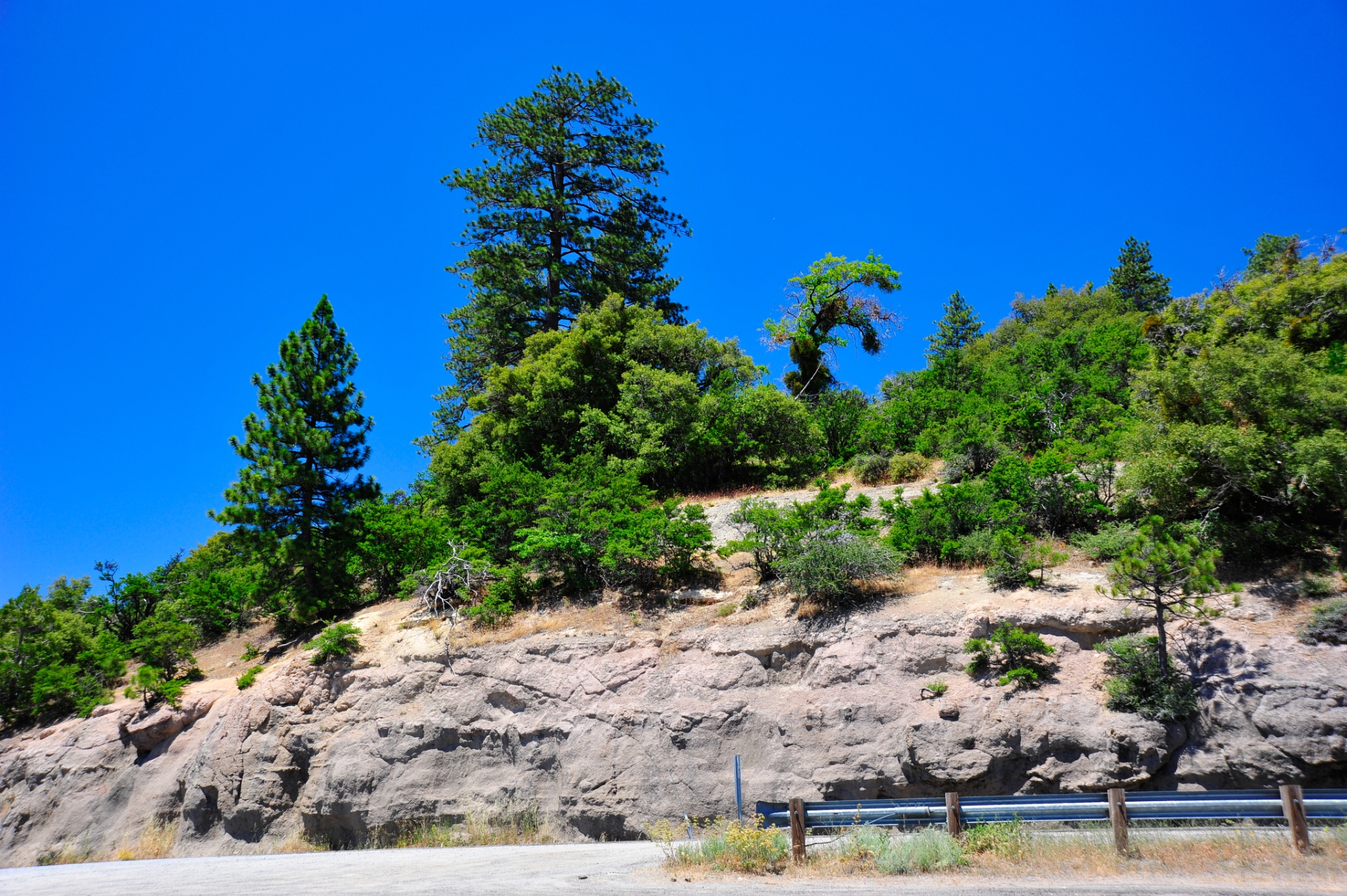
12 Here's the large roadcut near Little Sweden that has is primarily composed of pyroclastic debris flows.
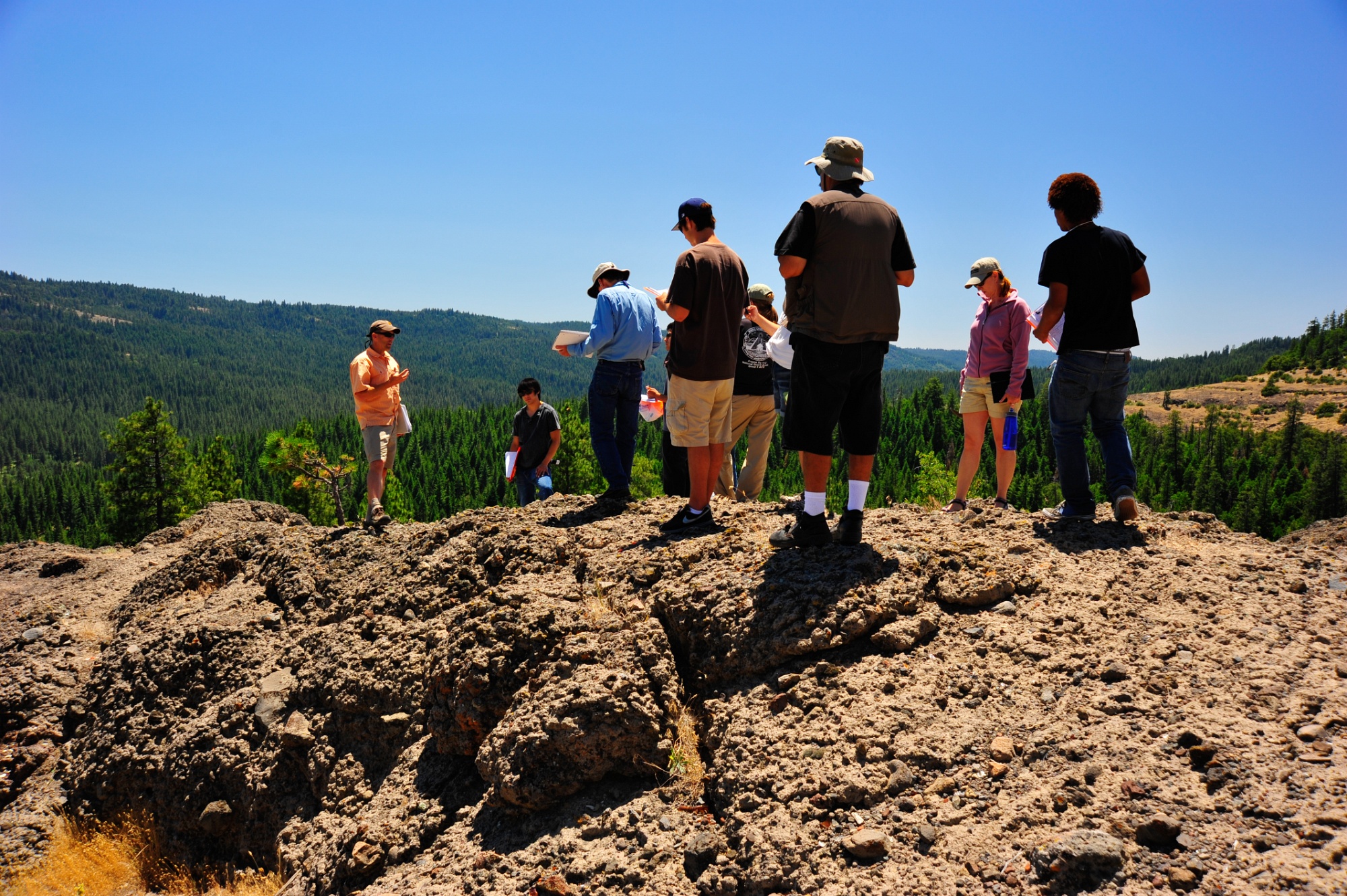
13 Underneath the pycroclastic flow is a thick layer of an andesitic breccia debris flow. Here the class checks out the clasts in the flow.
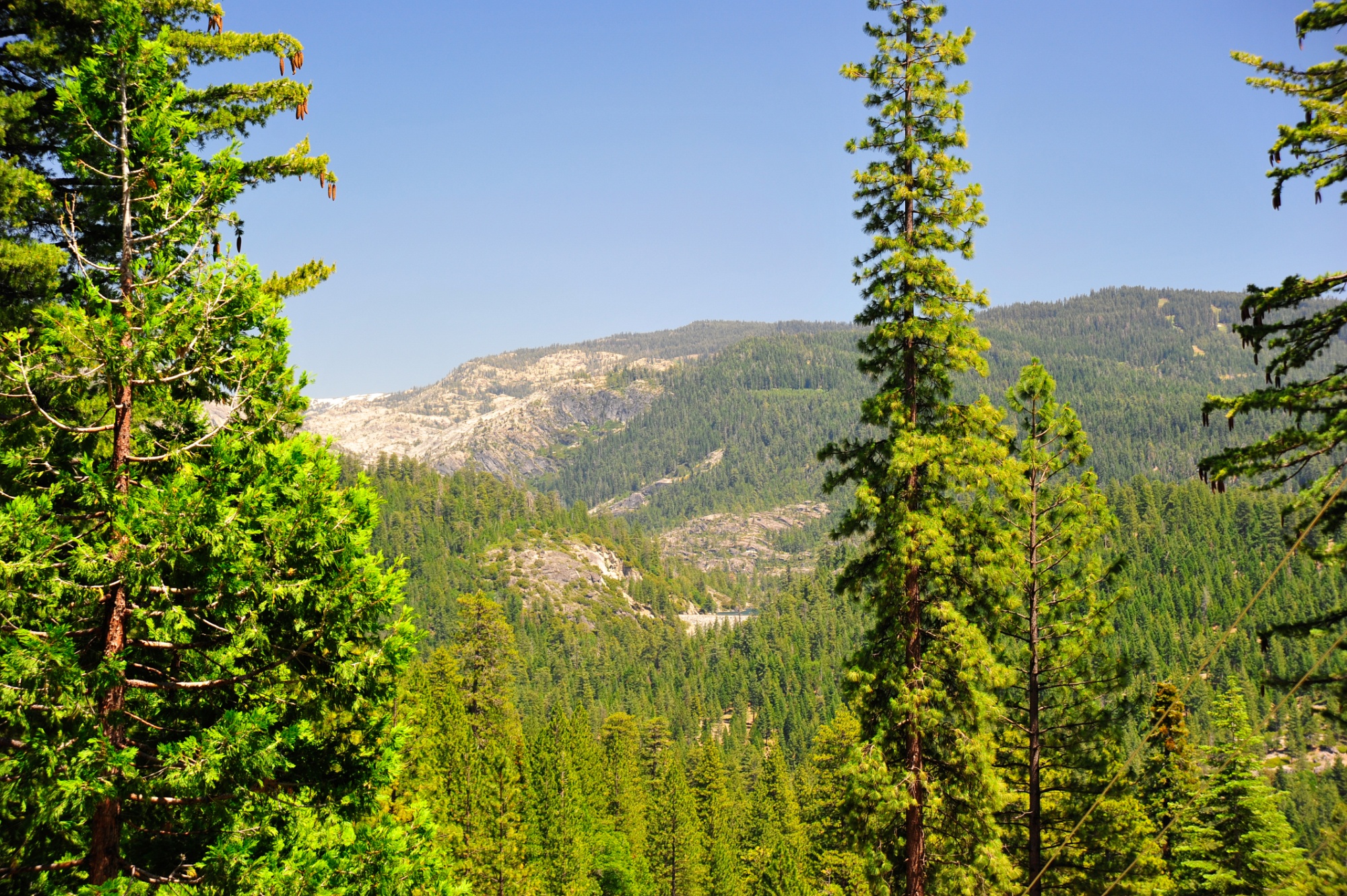
14 Zoomed-in shot of Pinecrest dam from our next stop of the day near Strawberry. This area was recently logged, opening this view.
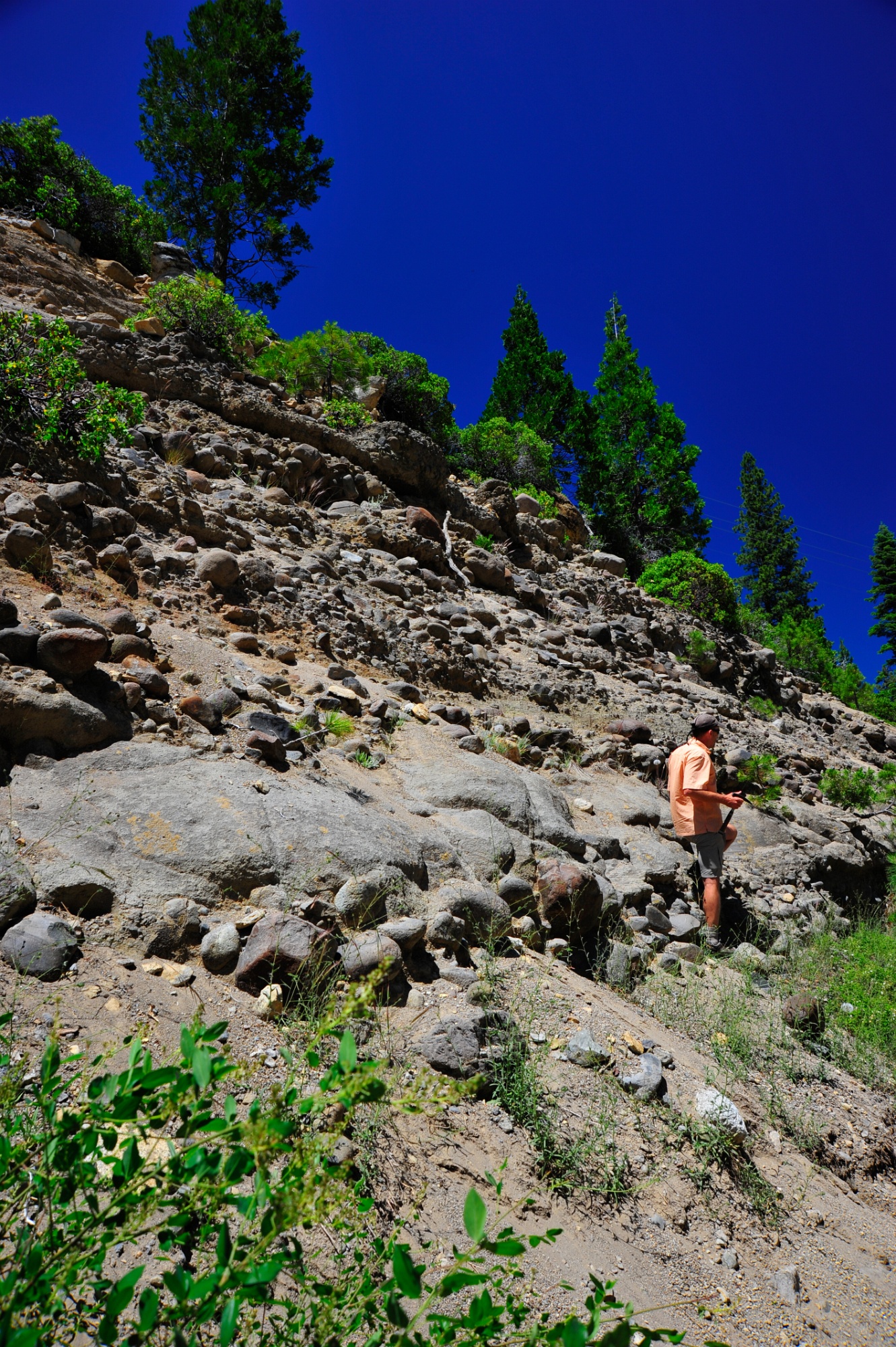
15 Note the rounded large boulders...
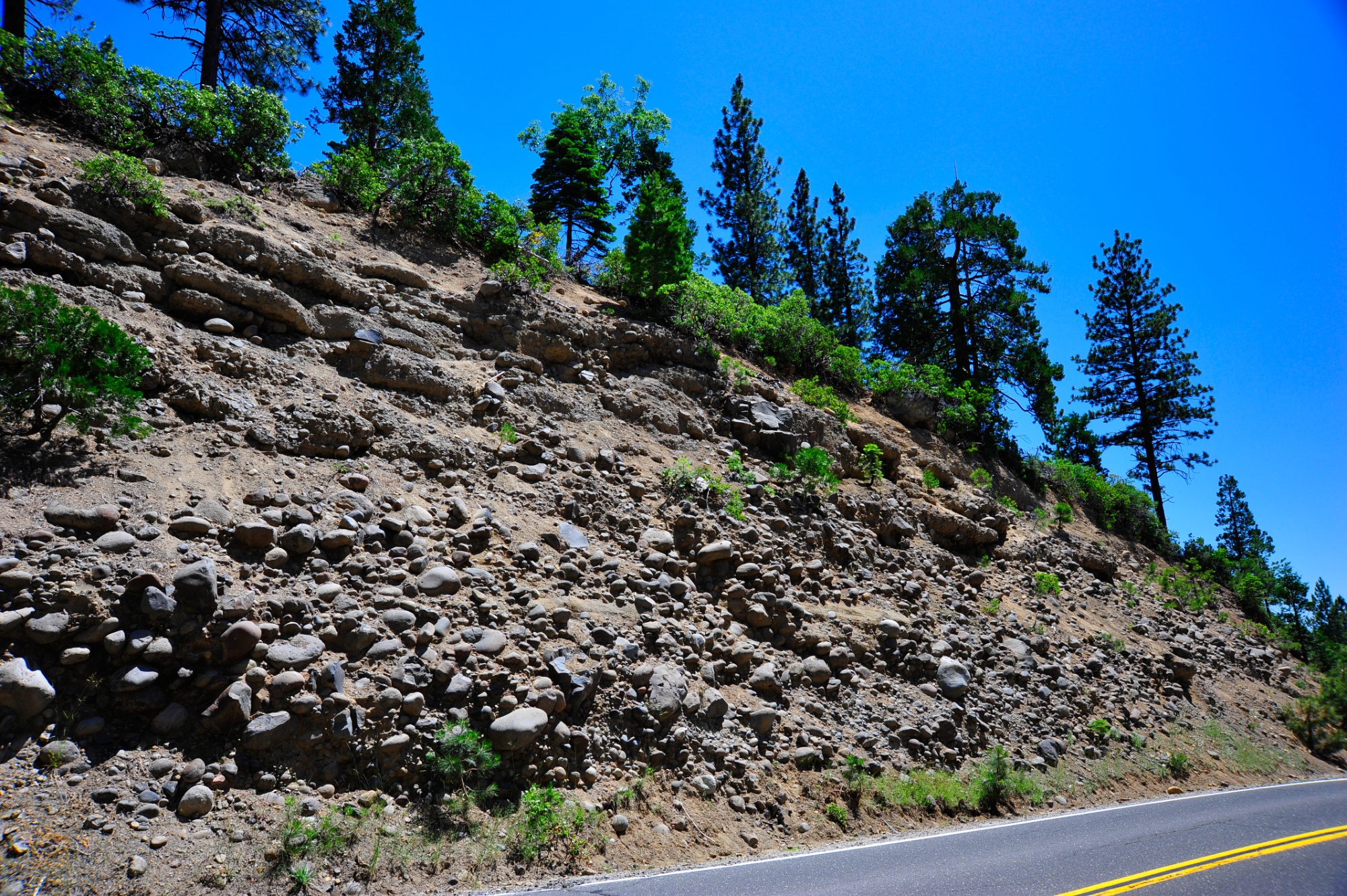
16 This river canyon was pouring off the slopes of the large volcano that produced the Mehrten Formation! That means this river coming off the Little Walker volcano & Nevada Plano 5-30 million years ago must have been very similar to rivers coming off Mt Rainier or St Helens today.
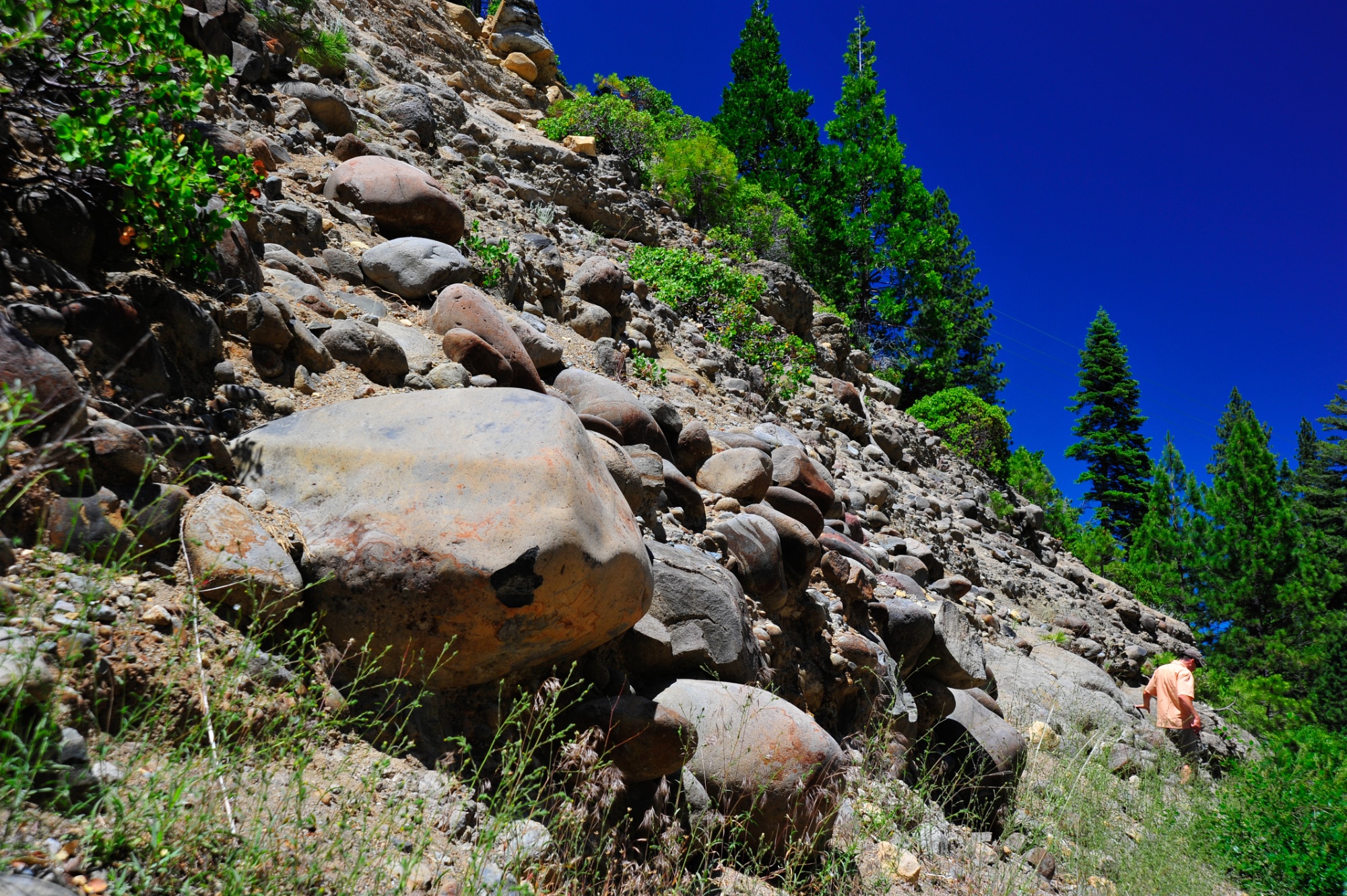
17 These boulder can only get rounded by bouncing along the bottom of a river. Since the bolders are so huge, they river velocity (speed), capacity (how much sediment it could carry) and competence (ability to cary big particles) had to be high. You only find fast moving waters in steep areas. So what conclusion can one draw from this geology??...
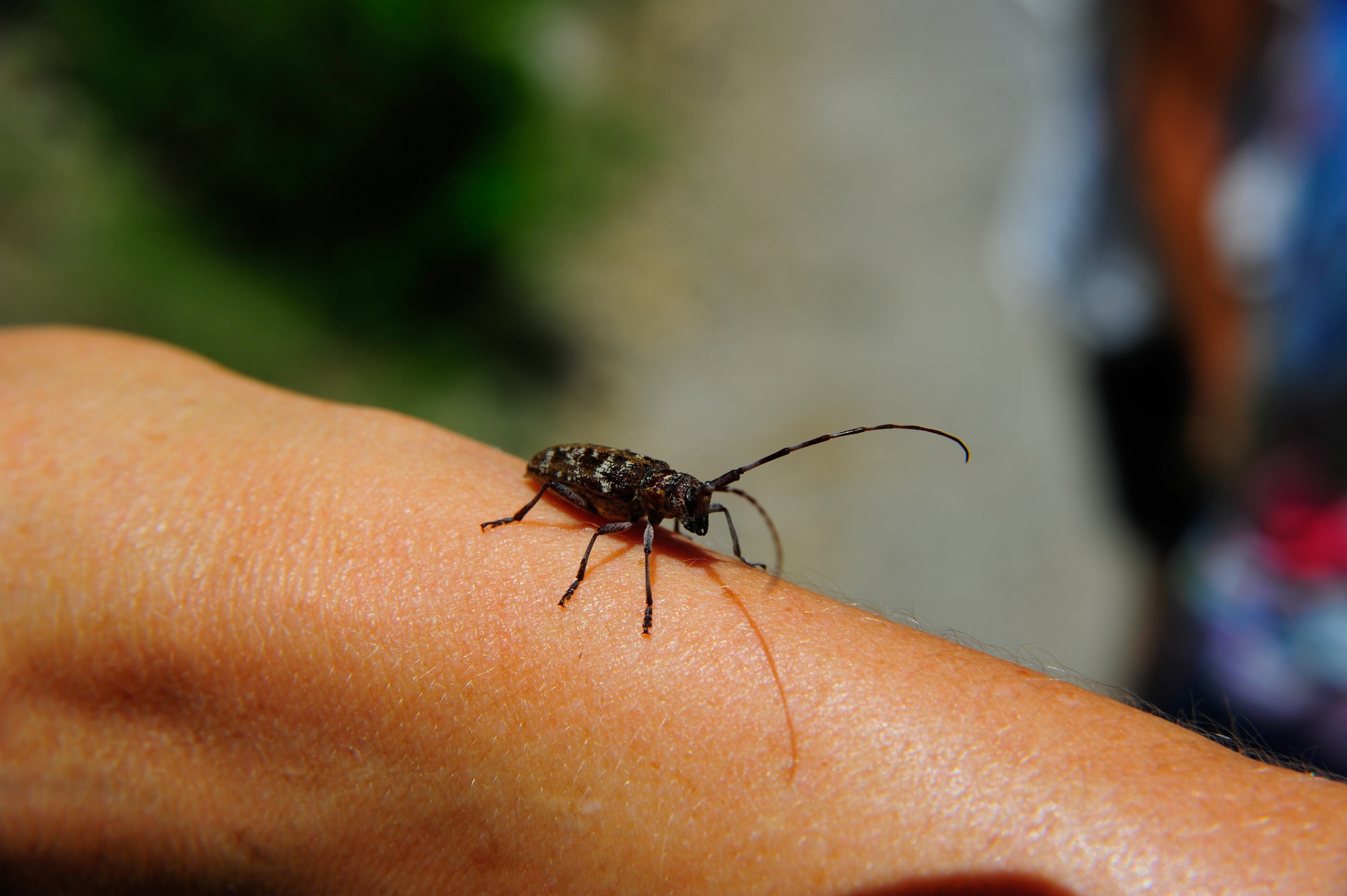
18 Sometimes geology gets interrupted with biology. This is an elderberry longhorn beetle.

19 Sometimes geology gets interupted with biology. This is an elderberry longhorn beetle.
20
Day 1 - MJC to Baker Station